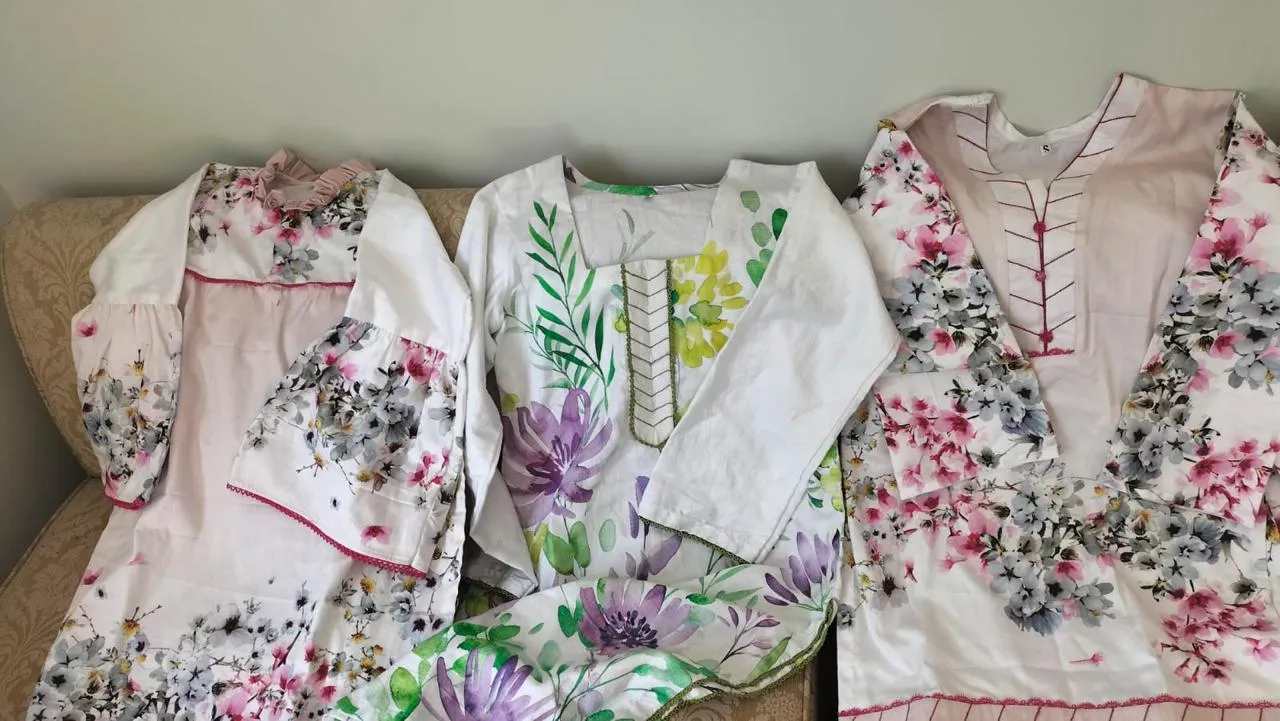
NBVC is in the process of getting accreditation for its Stitching and IT Center from NAVTTC in accordance with their comprehensive procedure. A comprehensive visit over three days has been conducted in August 2025 which successfully graded the NBVC for accreditation by NAVTTC. The five Performance Areas (A-E), as explained in NAVTTC Accreditation Manual, were assessed in detail.
NAVTTC ACCREDITATION QUALITY STANDARDS – NBVC
Performance Area A – Governance and Management
Purpose The purpose of Numb Bhera Vocational Center is to teach talented boys and girls the skills of clothing design and sewing. After training, the selected skilled boys and girls will be provided with business facilities for sewing work at the center. One of the center’s objectives is to reward the top-performing students with a sewing machine.
Organizational Structure The center is managed under the following organization:
- Trustee Council
- Administrative Committee
- Principal
- Teachers
- Sewing Experts
Members of the Institute Management Committee (IMC)
- Maj Gen (Retd) Syed Najeeb Ahmed, Chairman Numb Rohi Welfare Society
- Mrs Novaira Najeeb, Vice Chairman Numb Rohi Welfare Society
- Mr Syed Oneeb Ahmed, General Secretary Numb Rohi Welfare Society
- Mr Anees Abbasi, Community Educationist
- Mr Chaudhry Tariq Mahmood, Notable/Community Liaison
- Mr Chaudhry Ishrat Mahmood, Notable/Community Liaison
Principal: Mrs Novaira Najeeb
Teachers: Teacher Abida Nazar, Tailor Master Muhammad Gulzeb
Sewing Experts: Tailor Muhammad Shehryar, Tailor Muhammad Javaid, Tailor Muhammad Sheeraz, Tailor Usman Ali
Responsibilities of IMC Members: Functioning of Center’s facilities such as maintenance of sewing machines, electricity, and water supply, monitoring the generator system, cleanliness of the building and machines, supply of raw materials, ensuring internet and computer facilities, and sale of finished garments.
Principal’s Responsibilities: Coordinating with the administrative committee, monitoring the performance of teachers and students, conducting monthly exams for students, tracking students’ attendance and absence reasons, timely payment of staff salaries, attending NAVTTC meetings, motivating and preparing all students for final exams, checking sewing quality, ensuring the availability and sufficient supply of raw materials, giving motivational lectures, and instilling self-confidence.
Teachers: Arriving on scheduled times six days a week to teach the students sewing-related lessons, completing the syllabus on time, continuously taking exams and preparing students to be proficient in designing, cutting, and sewing, and providing awareness about color theory. Continuously updating the Principal on students’ performance.
Sewing Experts: Providing opinions based on their extensive experience, monitoring students’ learning, and critiquing their finished work to effect improvement.
Office and IT Assistant: Overseeing the office work and IT equipment of the Center.
Watchman: Overseeing the cleaning and safety of the center, providing clean drinking water, and making purchases from the market.
Sanitary Worker: Ensuring the cleanliness of the center for a clean environment for all present.
Quarterly Meeting of NBVC IMC on June 27, 2024
- The meeting was attended by Principal Mrs Novaira Najeeb, Maj Gen (Retd) Syed Najeeb Ahmed, Mr Chaudhry Tariq Mahmood, and Mr Chaudhry Ishrat Mahmood. The progress of courses under NAVTTC and NUTECH was reviewed. The administrative committee expressed satisfaction with the progress and skills achieved by the participants in sewing. Participants praised the quality of the sewn garments. Discussions were held on selling these garments in the market and sharing profits between the center and the trainee seamstresses.
- On Mr Chaudhry Tariq Mahmood’s suggestion, it was decided to arrange the sale of sewn garments at reasonable prices on Murree Mall Road and Kalam Swat. This work is currently on hold till the exam of the students in August 2024 where their sewed dresses would be seen by the examiners, after which their sale would be planned.
Admission Program
- The Stitching Center has a systematic program. Currently, two courses of female students are being taught. The first, six-month course, under NAVTTC, is running with 20 seats. The second, three-month course, under NUTECH, is also running with 20 seats with a nominal fee. For the first course, the admission system prescribed by NAVTTC, which started in December and completed in February, was followed. As a result, a six-month course began with 20 students, which is now two-thirds completed. Successful participants will be awarded a NAVTTC certificate.
- The second course started in May with a nominal fee, organized in the afternoon. Some deserving girls were given discounts or exemptions. This course was scheduled to last three months, however it has a high dropout rate due to opening of schools / colleges and the students preferring their formal education over this course. Anyhow, this course was taught according to the NUTECH dressmaking syllabus and its exams at the end of the course will be conducted by NUTECH, after which successful participants will be awarded a NUTECH certificate.
- Contact is maintained with NAVTTC for the next course, and based on the successful conduct of this course, an application for 40 seats in ‘dressmaking course’ has been made, the process for which will start after the NAVTTC course announcement, expected in Jan 2025. Additionally, a dressmaking course under NUTECH will be run for those boys and girls who are eager to learn but could not be selected for NAVTTC seats on a minimal monthly fee basis. This way, the sewing center aims to achieve its target of at least 100 participants per year.
Financial Affairs of the Sewing / IT Center
- The sewing center, which is a part of the NBVC, works on a non-profit basis under a welfare society named Numb Rohi Welfare Society, overseen by the trustee council under the Memorandum of Association of Numb Rohi Welfare Society registered under Section II of the Society Registration Act (XXI) of 1860.
- So far, the allocations received from NAVTTC are being used to cover the expenses of both courses being run in the sewing center efficiently. In summary, the center’s expenses include administrative staff, teachers’ salaries, electricity bills, repair costs, purchase of teaching materials, computer, and internet expenses. Details are available in the relevant records. The Center has planned for the next two financial years, including sewing machines, furniture, and internet facilities. Our financial planning primarily focuses on running the Center’s expenses on government subsidies, a practical example of which is present in the efficient financial management of the dressmaking course under NAVTTC.
- Three IT courses, i.e., office management, digital marketing and graphic design are underway with approximately 40 students on self paid basis in collaboration with Digital Skills service providers. Upon completion of these courses in end of January 2025, NAVTTC accreditation will be pursued by mid February 2025.
Audit Arrangement: Done by Nasir Absar & Co, Islamabad and relevant reports for FY 22/23 and 23/24 are available.
Monitoring and Evaluation of the Center
- The monitoring and evaluation of the sewing center is carried out under NAVTTC and NUTECH’s impartial evaluators. In this regard, an institution appointed by NAVTTC visited the Numb Bhera Vocational Center on 4 May 2024 and reviewed all administrative and teaching matters. NAVTTC, as a result of the positive report, released the next installment of the subsidy to NBVC.
- Similarly, the NUTECH team visited the center on 19 December 2023, expressing satisfaction with its technical and administrative matters and declaring this center an affiliated institution of NUTECH.
- At the end of the Fashion Design and Dressmaking course of NAVTTC in Sep 24, a comprehensive audit of the course affairs was carried out by Munif Ziauddin & Co for NAVTTC.
NBVC Digital System: The following systems have been installed to improve performance at the center:
- 11 digital camera – For monitoring buildings and rooms, especially classroom activities.
- Face Recognition / finger print attendance System
- Desktop Computers – forty desktop computers have been installed in the center for teaching basic computer education to boys and girls and maintaining the center’s digital records.
- Internet – The center has been provided with 20 mbps internet facility via Optical Fiber, available on the fourty desktop computers mentioned above and also on Wifi.
Competence-Based Training & Assessment – CBTA: The courses run under NAVTTC at the sewing /IT center have been conducted under CBTA quality. The course’s examination structure was entirely based on practical tests and exams, focusing less on theoretical knowledge and more on practical knowledge and its demonstration in the form of sewing. Both the principal and the teacher are suitably qualified for supervising and conducting this training and assessment. Similarly, well qualified teachers have been engaged for the IT courses.
Environmental Remediation: As the center is located in a hilly area and is well ventilated, there’s not much requirement for cooling. Electricity is used only for machines and computers. Due to the lesser availability of sunlight in the mountainous terrain compared to the plains, a solar panel system for electricity generation is not feasible.
Performance Area B – Physical Environment
Layout of Open Basement / Ground Floor:
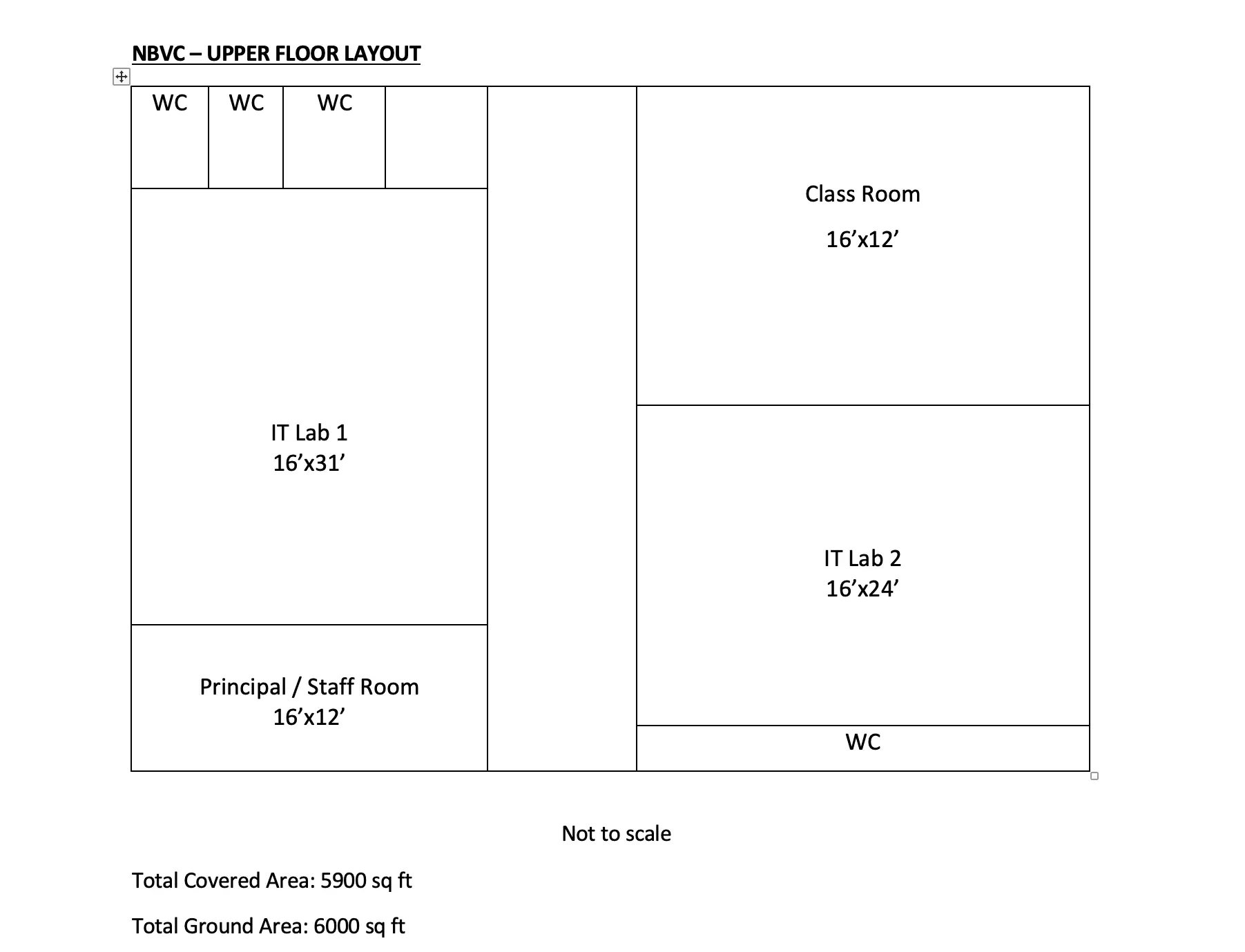
Layout of Upper Floor:

Furnishing of Equipment for Training
Stitching

Stitching Lab 1: Capacity 25
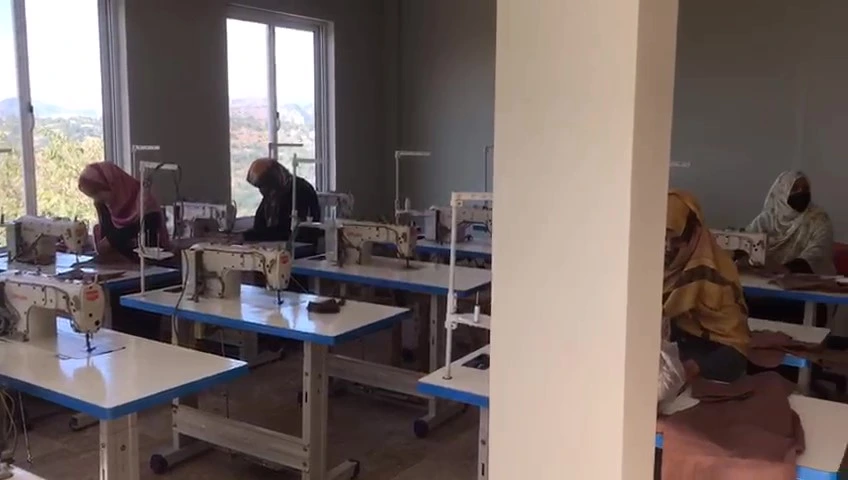
Stitching Lab 2 / Incubation Center: Capacity 25
There are a total of 41 computerized sewing machines, 2 over-lock sewing machines and 1 button hole stitching machine with their original tables are distributed as per need in the three stitching labs. Apart from these, revolving chairs, stools, tables for drafting and irons for students are also provided in each stitching lab.
IT: 41 computers are available for familiarizing the stitching students with basic computer / Internet skills for the purpose of searching and saving information related to dress making. These computers are utilized for the IT courses for boys and girls.

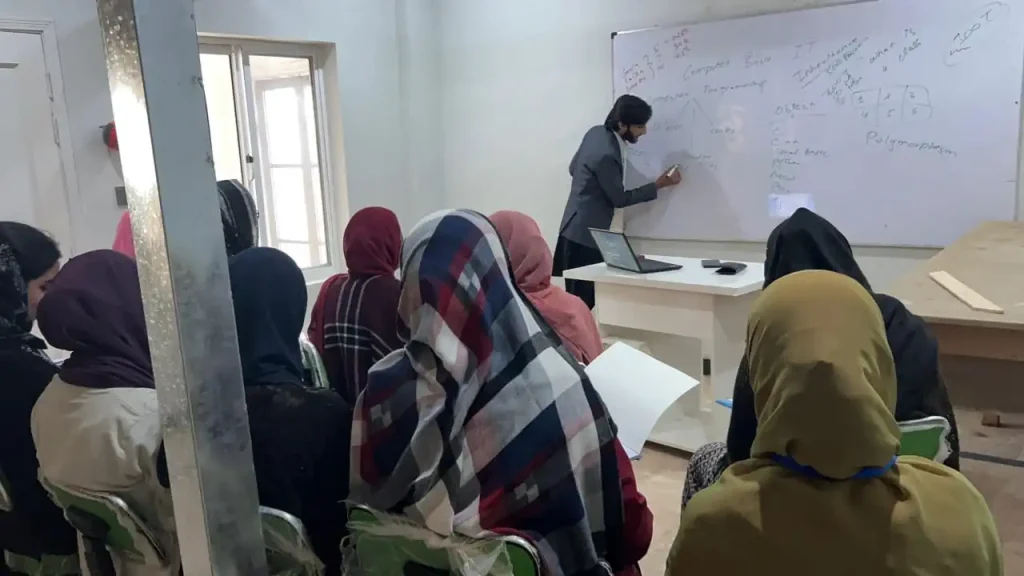
Layout: The two stitching labs have been furnished in a manner that every student has a revolving chair / stool with access to a stitching machine, visibility of the white board with a good overall ratio of students and stitching machines, i.e, approximately 1.25 student per machine. This is most appropriate as students distribute their practical time in drafting, cutting, hemming, consulting and stitching; thus sufficient machine-time is available for each student. CBTA is used for stitching training as each step of learning is marked by very fixable check markers indicating the proficiency gained by every student. Similarly, the two IT labs are equipped with good quality furniture and seating arrangements to ensure comfortable learning environment.

Safety Considerations. The entire center has ample of exits in multiple directions to ensure safe egress of occupants in any emergency. The equipment and furniture is laid out in a manner that allows easy movement of students and teachers in labs and in adjacent corridors. All the furniture is moveable and allows readjustment as per need. The electric points of connecting the sewing machines and computers are especially designed in fixtures which allow easy and safe passage in class rooms.
The Maintenance and Safety of Equipment. All the sewing machines are periodically maintained and repaired on required basis by our technician, Mr Jafar Abbas from Koh-e-Noor Textile Mills. All the computers are maintained by DigiSkills.
Library and Digital Resources. Ample desktop computers with adequate storage capacity and internet connections on fiber optic is placed specifically for the purpose of providing access to dress designing and other learning aids available on the web. These computers are available to the students as a digital library.
Washrooms. Clean, well-ventilated and sufficient number of washrooms are available for staff and students with dedicated cleaning staff appointed for their cleanliness.
Clean Drinking Water. The Institute provides clean drinking water taped from natural underground spring.
Social Areas. On the ground floor a dedicated lawn of 20 x 20 feet is available for female students to have some eatables and socialize. For boys, the open area on mountain terraces are available all around.
Staff-only Areas. A dedicated staff room is available on the first floor for the Principal and Staff.
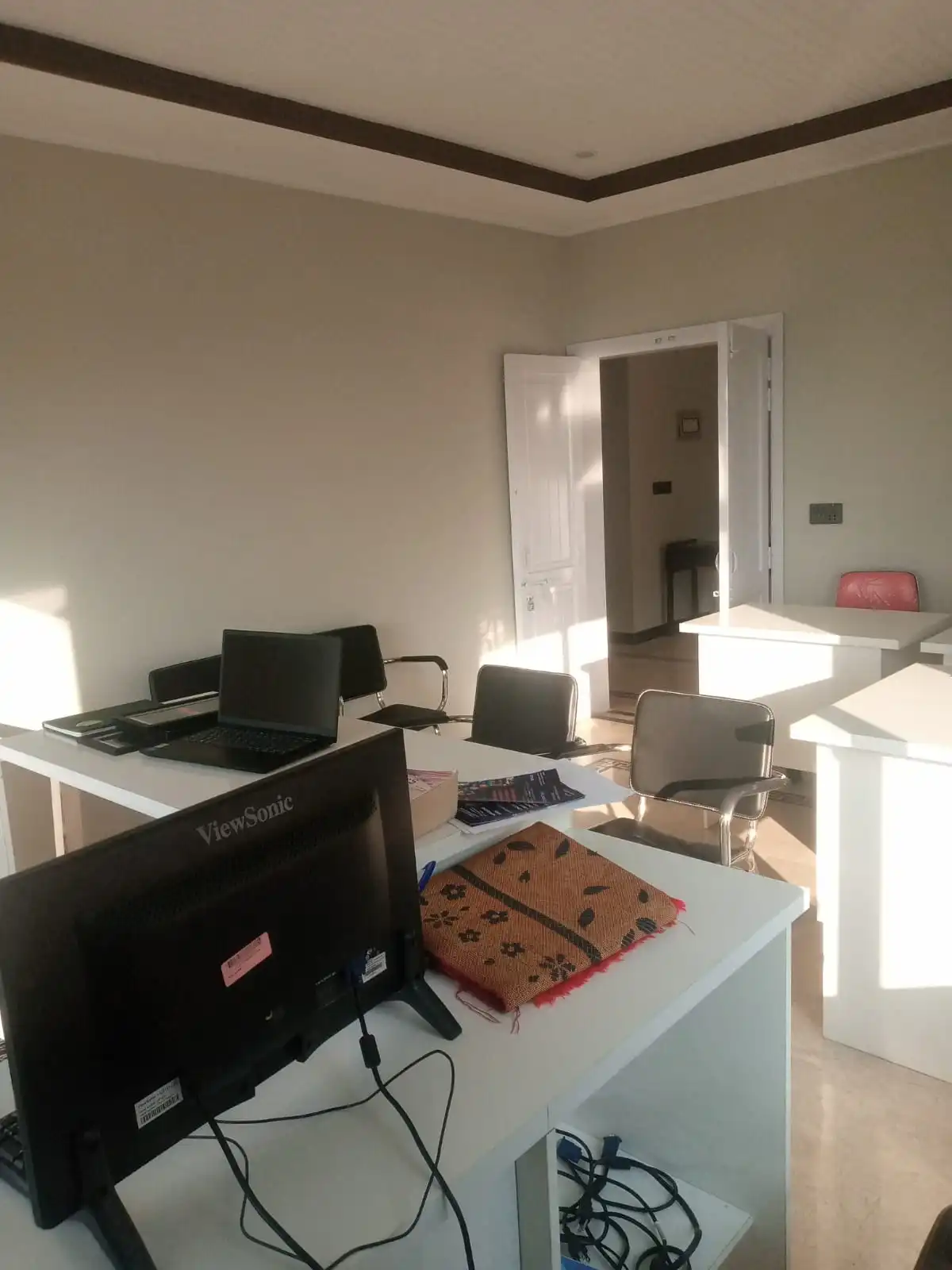
Environment of the Institute. The scenic setting, well ventilated rooms and moderate temperature afford a comfortable environment for students and staff for learning. Regular cleaning takes place in the Center on daily basis.

Safety of Staff and Students. Fire extinguishers have been installed in the building and staff / students have been briefed about its automatic usage. First aid box has been placed which includes, bandage, Pyodine, band-aid, Polyfax, pain killers, antihistamine and anti-diarrhea medicines.
Performance Area C – Program Management
Teachers Allocation. In the stitching Center, Mrs Abida Nazar, who has relevant experience and qualification as evident from her CV, is teaching the batch of 20 students. Her appointment letter and class list is available. For the time being, due to less numbers of students, teaching assistants have not been employed, however if the vacancies will increase from 20 to 40 in the next course, a lab assistant with appropriate experience will be employed. In the IT Center Mr Muhammad Aamir, BS Software engineering is teaching and managing the education and training.
Program Management SOPs
1. Registering students:-
- The process of registration begins with the allocation of seats for the respective course by the concerned authority like NAVTTC.
- The allotted vacancies of the course are advertised on social media with pre requisites, seeking application from desired students.
- The students are registered on NAVTTC’s Portal for entry test and scrutiny for given criteria.
- The shortlisted students are made to appear in entry test in the Center.
- The candidates who are successful in the entry test are called for interview at the Center to assess their suitability. NAVTTC decides about the final selection and informs the selected candidates.
- In the IT courses, students are registered with NBVC.
2. Managing the Course: The management committee will monitor the progress of the course with respect to attendance and motivation of the students to curb absenteeism and student drop out.
3. Ratio of students to teacher.
a. The ratio of student to teacher will be maintained at 20-25 students per teacher in both stitching and IT classes.
b. The teacher will be responsible for creating class time table according to the curriculum.
c. The Principal will ensure that the entire curriculum along with sufficient practice is covered by even distribution in weekly time tables spread over the entire duration of the course.
Class Sizes: Stitching labs 1 and 2 are designed for 25 students each. IT labs 1 and 2 are designed for 20-25 students each.
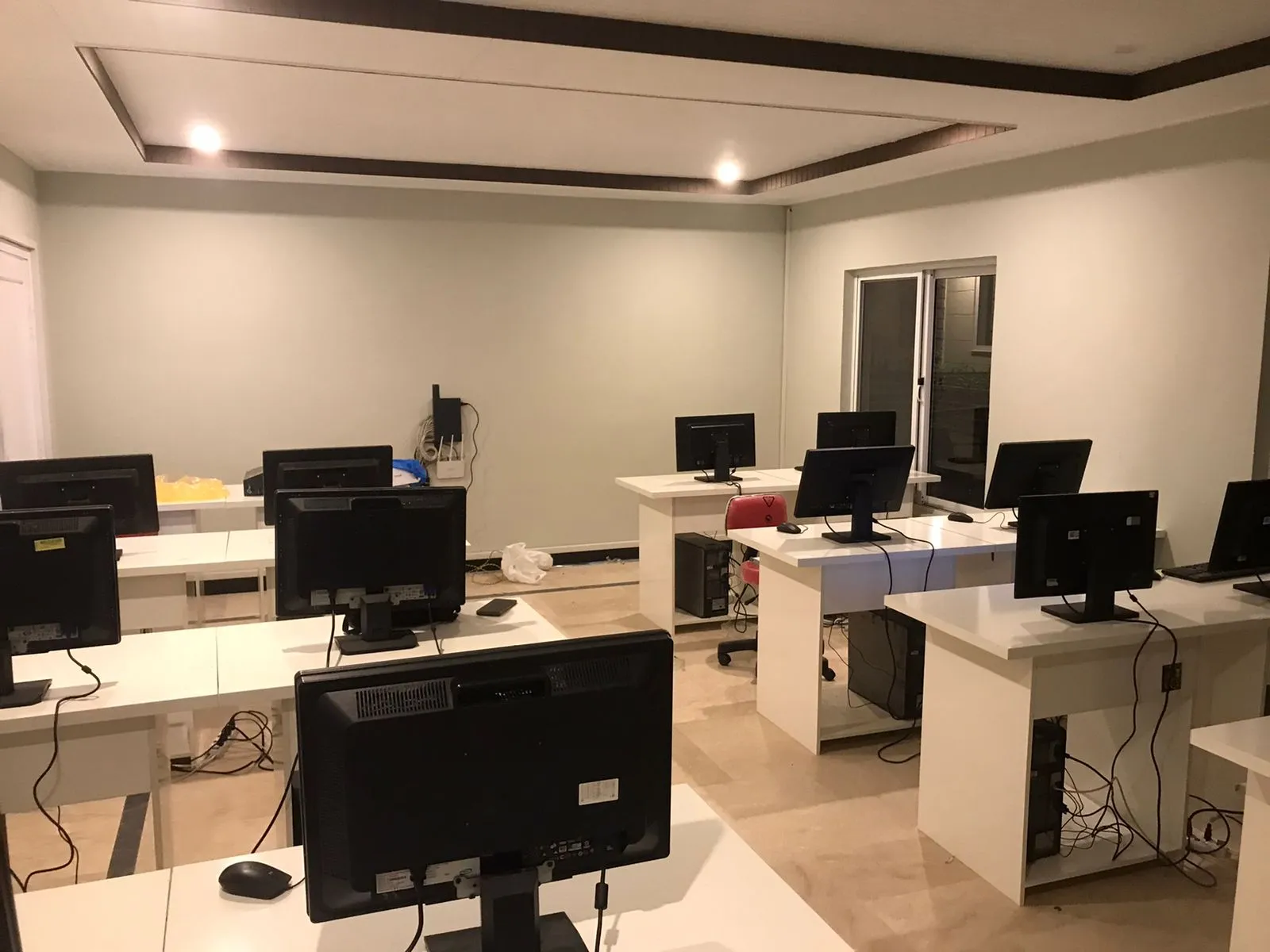
IT Lab 2

IT Lab 1
Teaching Load. The teaching load for NAVTTC’s dress making course is 20-25 students per teacher.
Contingency Plan of Replacement Teacher. In case of Teacher Abida’s absence in emergency, our contingency teacher Ms Zahida is the replacement teacher.
Curriculum Coverage. The Principal provides guidance to the teachers to divide the curriculum over the duration of the program by scheduling various curricular activities appropriately. During the course, the Principal monitors implementation of the intended lessons covering the entire curriculum.
Balance of Theory and Practice. Ample opportunity is provided to the students for practice alongside teaching of relevant theory in a manner that every student gets to stitch 6-7 dresses of different designs and sizes, including ladies dresses, kids wear and men/boys wear. A record of the apparels stitched by students in the stitching lab is maintained.
Budget for Consumables. Stitching cloth, thread, laces, button, fusing of different thickness, brown paper and other relevant stationary items are consumed during the course. Those are provided as and when required and its inventory is maintained.
Co-curricular Activities
- The students were given an opportunity to learn computer basics including surfing the internet for finding dress making, photos, videos, saving their links on the computers and retrieving them for subsequent utilization.
- An activity of block and screen printing will be performed at the Center, which is unique and enjoyable for the students.
Performance Area D – Teaching, Learning and Assessment
Teaching begins with theoretical description of the day’s lesson, followed by its hand-on practice by every student. For example, if the lesson comprises neckline design, the students are first briefed on the board about the various aspects of this design followed by individual practice of stitching only neck line portion of dress on cut pieces by every student.
Teacher’s Performance The Principal carries out regular appraisal of the teacher and guides her as and when required. Student’s feedback is sought by the Principal directly and any shortcomings observed are discussed with the teacher and teaching / assessment methodology is modified, if required.
Continuing Professional Development (CPD) of Teachers: So far no CPD has been effected in the past four months, since the commissioning of this institute, however it will be organized at the end of the current course.
Monitoring and Recording of Student’s Progress. Class tests of students are regularly carried out and their record is maintained. Stitching work of the students is recorded and the students are informed about critique by experts on those works.
Students Understanding of their Assessment. The students are appraised of their assessment methodology, including theory and practice both. The contribution of their stitching projects towards their grade is shared with them. The format of their final exams will be shared with the students upon receive from NAVTTC. The distribution of marks between theory and practical is also shared with the students. The contribution of attendance towards successful completion of this course is also clearly communicated.
Assessment of Learning Outcome (LOs). The institute is cognizant of aligning the assessment of LOs, especially the practical elements of it. The theoretical elements are also discussed, in line with the curriculum LOs.
Transparency of Assessment. Students are briefed about the assessment methodology. All assessment are double checked by Principal and the same criteria is followed for all students.
Recognition and Rewarding of Student’s Achievement. The students have been briefed that best few of them will be rewarded at the end of the course with a gift of electronic stitching machines. To give recognition to student’s work, a board is placed at the entrance of the Center where students’ works are put on display.
Performance Area E – Students Support and Career Guidance
Positive Learning Experience: The students have been guided about the work prospects which will open up for them upon successful completion of the dress making course including self-employment. The Center is endeavoring to involve students in business opportunities of selling their stitched garments in retail and in providing bulk stitching services, like school uniforms, under the Center’s arrangements.
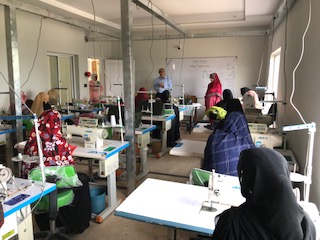
Motivational talk by Mr Pervaiz Abbasi, MD National Incubation Center on 26 Jul 2024
Additional help for Weak Students. Since some of the students in this institute come with low educational standard, at times only middle, the Principal and Teacher give special attention and time to those in need of help in reading, writing and number skills. The rural household setting of the students often hinders their attendance and learning motivation, which is overcome by personal intervention with them and their family through phone calls and personal meetings.
Enhancing Work Opportunities. Since this Institute is working in a rural setting away from any industry, and aiming at capacity building of females, it is trying to enhance the work opportunities of its graduates by involving them in bulk stitching orders and selling their dresses in retail. Our low input costs to produce value added products for appropriate markets is being focused upon to create feasible business opportunities for the students. About twenty female students are engaged by a female school uniform stitching entrepreneur for bulk stitching orders. Although the margin of profit is quite less when it comes to paying the labor of each uniform is quite less, but it provides a good internship opportunity to build the stitching capacity of the new female tailors. As their stitching speed builds up, their income would also increase. Moreover, NBVC is trying to get a retail shop in Murree where its stitched products including school uniforms and ladies garments can be sold directly thereby increasing the profit which will help sustain the cost of doing business for the Center and also increase the earnings of the tailor workers.
Work Based Learning (WBL) Opportunities. After the initial phase of the course, i.e, after the third month onwards WBL of the students started where they produced competitively stitched dresses, meeting the standards of decent retail outlets. Learning from that experience, more such WBL opportunities will be provided to the students with real life earning opportunities.
Career Guidance. The institute is endeavoring to develop entrepreneurial skill in the students to help them start their own business of stitching from home, marketing their skills, pricing their products and dealing with their customers skillfully. Murree Development Foundation (MDF) is collaborating to conduct exclusive career guidance sessions for NBVC students. Their team visited on 21 December 2024 and an MoU to this effect would be signed shortly.
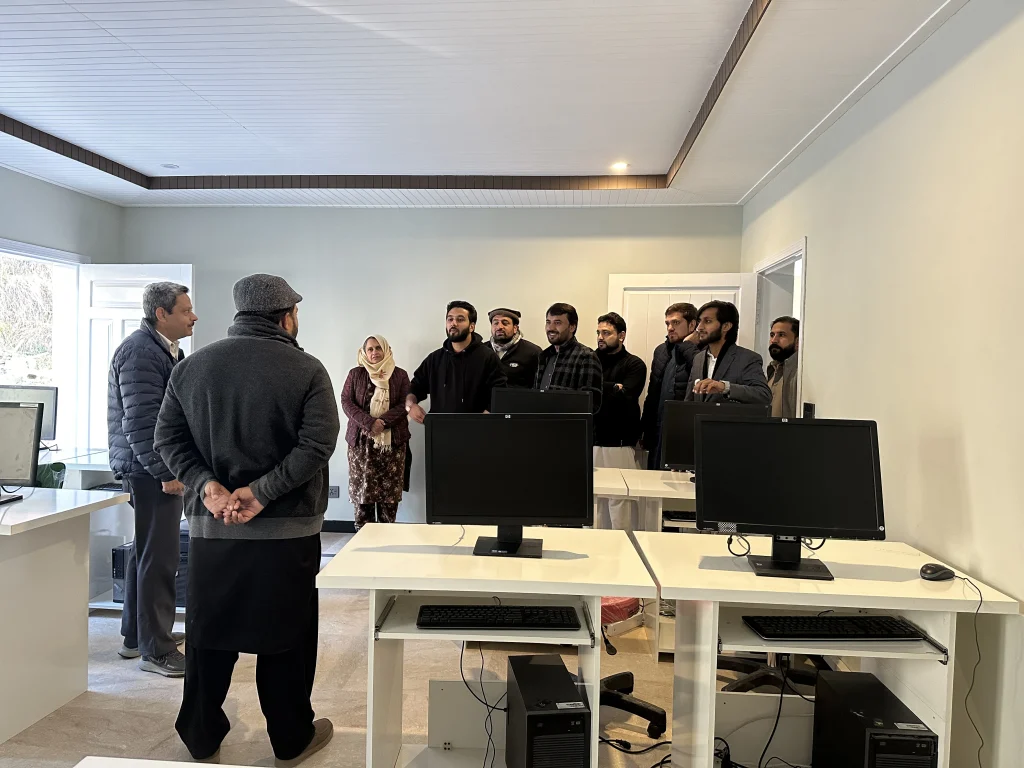
Students Feedback. The staff regularly interacts with students to gain first hand feedback and this valuable input is utilized to improve the Institute’s services.
Tracking Student’s work after completion of their course. Since the ongoing course of dressmaking is first for the Center, such mechanism has not been implemented, though it has been taken note of and will be incorporated in future.
.